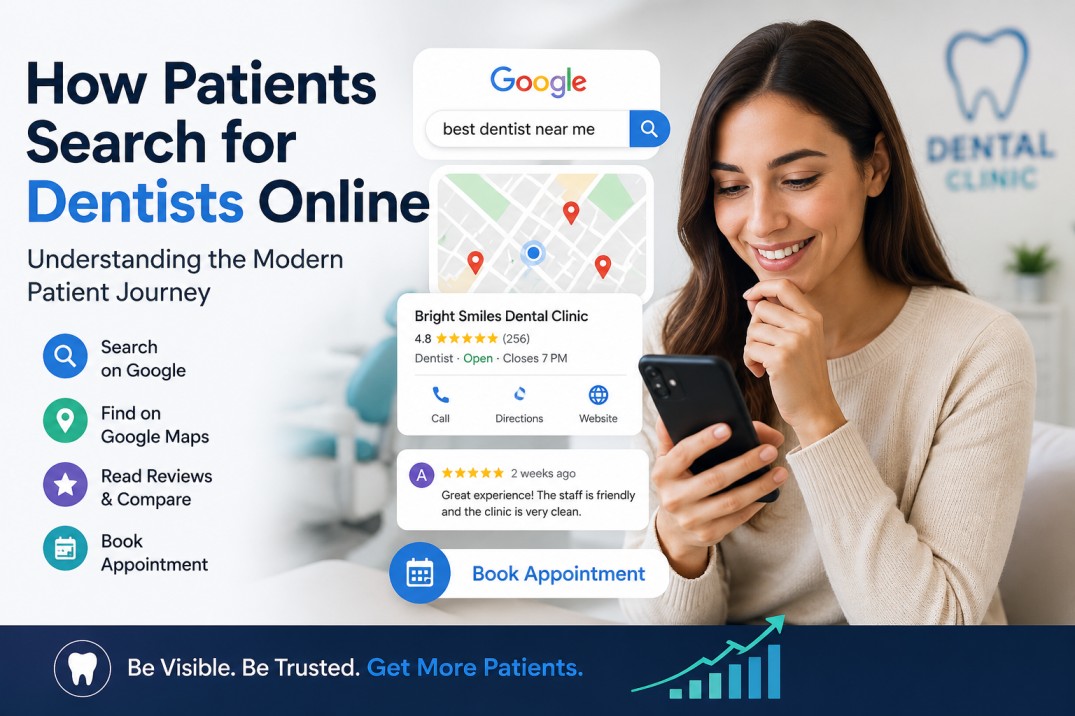
Finding a dentist is no longer as simple as asking a friend or family member for a recommendation. Today, the majority of patients begin their search online, using Google Search, Google Maps, and other digital platforms to compare clinics before making an appointment. Whether someone is suffering from a sudden toothache or planning a cosmetic dental treatment, they want quick access to reliable information and trusted professionals. This shift in patient behavior has made a strong online presence essential for every dental practice. Understanding how patients search for dentists online can help clinics improve their visibility, attract qualified leads, and convert more website visitors into booked appointments.
The Search Journey Begins with a Problem
Most patients don't wake up thinking about SEO. They wake up with a dental problem. It could be severe tooth pain, bleeding gums, a chipped tooth, or the desire for a brighter smile. Their first reaction is usually to take out their phone and search Google. Instead of typing only "dentist," they use specific search phrases such as "emergency dentist near me," "best dentist near me," "dental implants," "teeth whitening clinic," or "root canal treatment." These searches clearly indicate what the patient needs and where they want to receive treatment.
Google understands this intent and tries to display the most relevant local clinics. If your website and Google Business Profile are properly optimized, your practice has a much higher chance of appearing in front of these potential patients. Otherwise, they will likely book an appointment with a competitor who has invested in Dental SEO and online visibility.
Patients Compare Multiple Clinics Before Making a Decision
Appearing in search results is only the first step. Modern patients rarely book an appointment after visiting just one website. Instead, they compare several dental clinics to determine which one appears the most trustworthy and professional.
Patients usually visit your website to understand the treatments you offer, learn about your experience, check clinic facilities, and see whether booking an appointment is simple. They also look for real patient reviews, before-and-after treatment photos, and clear contact information. If your website is slow, difficult to navigate, or lacks detailed information, many users leave within seconds and continue searching elsewhere.
This comparison stage is where many dental clinics lose potential patients—not because they lack expertise, but because their online presence doesn't inspire confidence.
Google Maps Plays a Major Role in Local Patient Acquisition
For local businesses like dental clinics, Google Maps has become one of the most influential platforms. When someone searches for "dentist near me" or "best dentist nearby," Google often displays the Local Map Pack before the traditional search results. Patients frequently choose a clinic directly from this section without scrolling further.
Your Google Business Profile acts as a digital storefront. It displays your clinic's location, contact details, operating hours, reviews, ratings, and photos. A well-maintained profile with accurate information and positive patient feedback encourages people to contact your clinic immediately. On the other hand, an incomplete profile or poor ratings can discourage potential patients, even if your services are excellent.
Online Reviews Build Trust Before the First Visit
Trust plays a significant role in healthcare decisions. Since patients cannot evaluate the quality of treatment before visiting a clinic, they rely on the experiences of others. Google Reviews have become one of the strongest factors influencing a patient's decision.
A clinic with hundreds of genuine positive reviews immediately appears more trustworthy than one with very few or outdated reviews. Patients often read both positive and negative feedback to understand the overall experience. They want reassurance that the dentist is skilled, the staff is friendly, appointments are managed efficiently, and the clinic maintains proper hygiene.
Encouraging satisfied patients to leave honest reviews not only builds trust but also improves your local SEO, making it easier for new patients to discover your practice.
Mobile Search Has Changed Patient Behavior
Most dental searches now happen on smartphones. Whether people are travelling, at work, or sitting at home, they use mobile devices to find nearby dentists within seconds. This means your website must be mobile-friendly and load quickly on all screen sizes.
A slow website or one that is difficult to navigate on a phone creates a poor user experience. Many visitors leave before exploring your services, increasing your bounce rate and reducing your chances of converting them into patients. Fast-loading pages, simple navigation, click-to-call buttons, and easy appointment forms significantly improve the patient experience and encourage more inquiries.
High-Quality Content Helps Patients Make Informed Decisions
Patients don't only search for dentists; they also search for answers. Questions like "Is root canal painful?", "How long do dental implants last?", or "What's the difference between braces and Invisalign?" are searched thousands of times every month.
Dental clinics that publish informative blogs, treatment guides, and frequently asked questions position themselves as trusted sources of information. Educational content helps patients understand procedures, reduces anxiety, and builds confidence before they even contact the clinic. It also allows your website to rank for a wider range of search queries, bringing in visitors at different stages of the decision-making process.
By consistently publishing valuable content, your practice can establish authority in the dental industry while attracting organic traffic from search engines.
Why Dental SEO Matters Throughout the Patient Journey
Dental SEO is not just about ranking higher on Google. It's about making your dental clinic visible at every stage of the patient's journey—from the moment they recognize a dental problem to the point where they schedule an appointment.
An effective SEO strategy combines local SEO, keyword-focused service pages, technical website improvements, high-quality content, internal linking, and reputation management. Together, these elements help search engines understand your website while making it easier for patients to find the information they need.
Unlike paid advertising, which stops generating leads when the budget runs out, SEO for dentists creates long-term visibility and sustainable patient acquisition. Clinics that consistently invest in SEO continue to benefit from organic traffic, higher rankings, and appointment requests over time.
Conclusion
The way patients search for dentists online has evolved significantly in the digital age. People no longer rely solely on recommendations—they research online, compare clinics, read reviews, and evaluate websites before making a decision. Every interaction, from your Google Business Profile to your website's loading speed, influences whether a visitor becomes a patient.
For dental clinics, understanding this modern search behavior is the first step toward attracting more patients and growing sustainably. By investing in Dental SEO, optimizing your local presence, and providing valuable information, you can ensure your clinic appears where patients are searching and earns their trust before they ever walk through your door.